
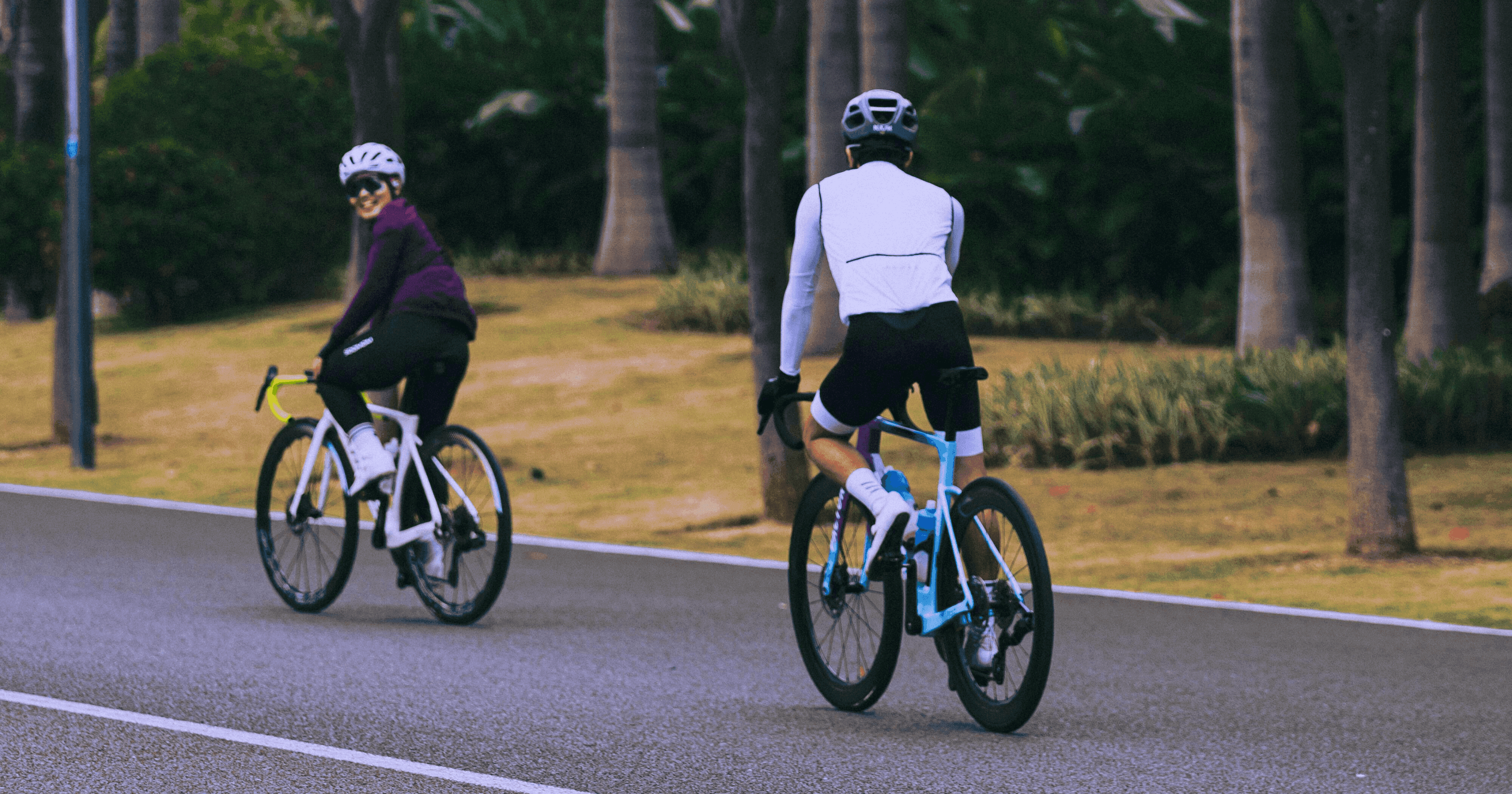
Spring has a way of flipping a switch for cyclists.
The light changes, the air feels different, and suddenly the bike that barely left the garage in winter becomes the centre of weekend plans again. Routes get longer, cafés move further away, and that first “proper” long ride starts calling your name.
That motivation is one of the best things about cycling. But every spring, it also leads many cyclists into the same situation: feeling ready before the body actually is. Research on endurance detraining shows that after periods of reduced riding, the cardiovascular system downshifts (lower plasma volume and stroke volume), metabolic efficiency dips, and power at threshold falls—changes that don’t reverse overnight. At the same time, connective tissues (think tendons and ligaments) adapt more slowly than muscles, which is why durability lags behind enthusiasm at the start of the season.
And that gap—between motivation and physical readiness—is exactly why your first 10 spring rides matter far more than your longest one.
What winter quietly takes away (and why it shows up in spring)
Even if you stayed active over winter, most riders accumulate fewer hours and fewer consecutive days on the bike. Inside your body, that adds up. With detraining, VO₂max and cardiac dimensions regress, and lactate threshold shifts—so the same hill “costs” more in early spring than it did last summer. More importantly, soft‑tissue tolerance rebuilds slowly: collagen‑rich tissues remodel over weeks to months, not days, so sudden load spikes outpace the rate at which these tissues regain strength.
In short: fitness can return quickly; durability takes longer.

The spring trap: when motivation runs ahead of adaptation
The most common spring mistake isn’t going for a long ride—it’s stacking too many demanding rides too quickly. Sports‑science literature consistently links sudden weekly load jumps with higher overuse‑injury risk across sports; big spikes relative to what your body has prepared for are the red flag. (Different models exist and the method has caveats, but the principle is robust: avoid “too much, too soon”.)
That’s usually when the subtle warnings appear: knees or lower back “not quite right”, legs staying heavy between rides, or mental fatigue that blunts attention in traffic—signals your body hasn’t fully adapted yet.
Why the first 10 rides quietly shape your whole season
It helps to think of spring as a transition phase. Your first 10 rides rebuild:
Efficiency on the bike (cardio and economy
Tolerance to repeated days in the saddle (joints and tendons)
Focus on real traffic conditions
Frequent, moderate sessions are safer and more effective than occasional hero rides early in the season; consistency drives adaptation better than single high‑load efforts.
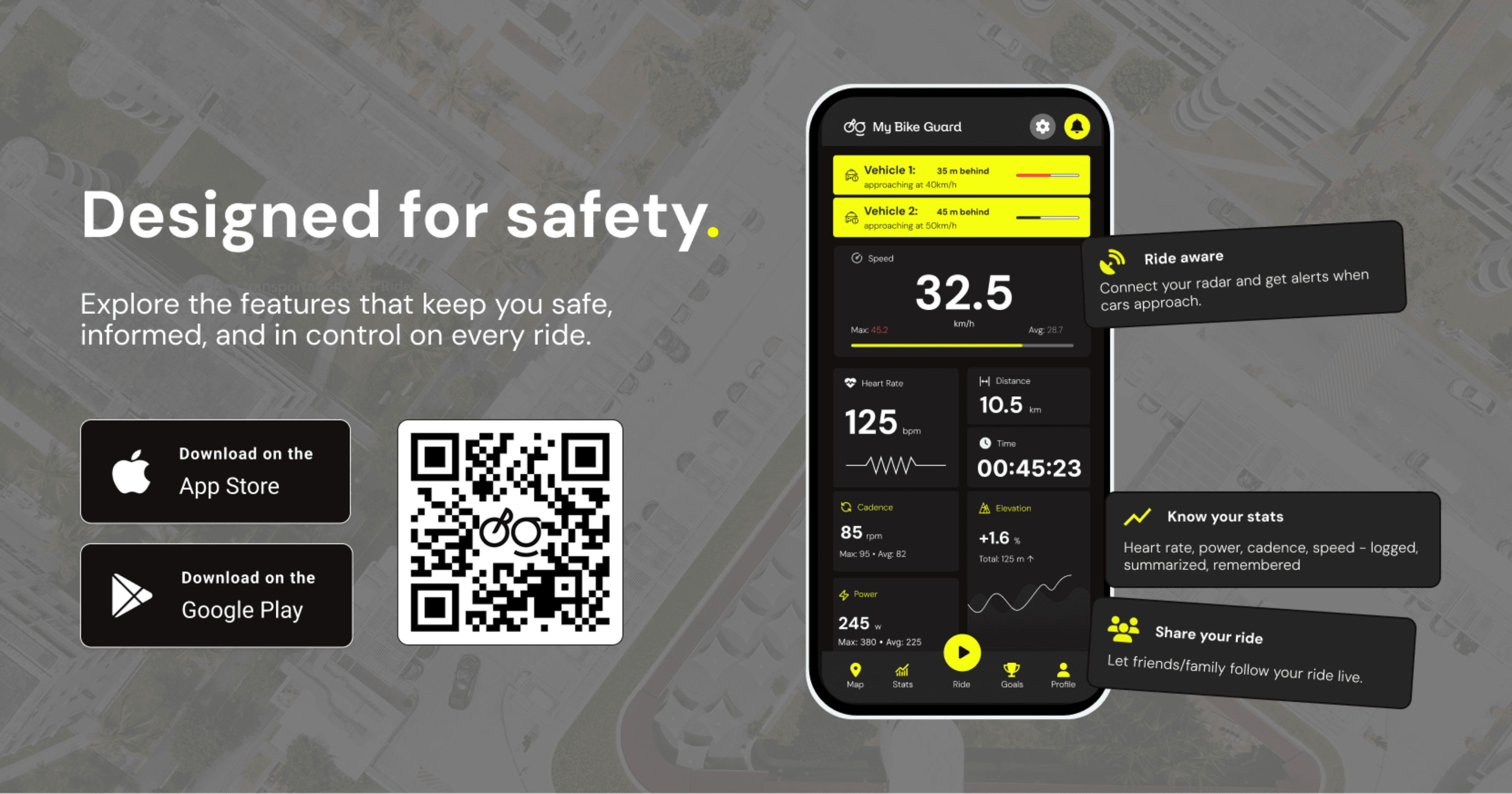
A practical way to stay honest is to log these first rides as individual Sessions in your My Bike Guard app. Seeing your first 10 Sessions lined up gives you a clear, low‑effort overview of frequency and time—useful for spotting “spikes” before they become problems, without getting buried in metrics
A balanced way to approach your first 10 spring rides
You don’t need a strict training plan. You just need to respect the order in which things should return.
Start easier than your excitement suggests
Early rides should feel controlled and comfortable. Finishing thinking you could have done more isn’t wasted potential—it’s the perfect setup for adaptation (especially for tissues that lag behind muscles).
Build rhythm before chasing distance
In early spring, regular riding beats long riding. Several moderate rides spread across the week help your body adapt progressively, while one long day followed by several recovery days breaks rhythm and adds risk.
Let duration return before intensity
A simple spring rule works surprisingly well: build time before you build effort. Endurance riding lays the base; hard efforts stress muscle, joint, and nervous systems more and work best once tolerance is back in place.
Use recovery as real feedback
You don’t need advanced data to know if things are going well. Feeling slightly tired between rides is normal; soreness lingering for several days isn’t. Poor sleep in endurance athletes is linked with higher new‑injury risk in the following weeks—so guard your sleep like training.
By ride 10, aim for confidence—not peak fitness
The goal of your first 10 rides is comfort, stability, and confidence to add distance or terrain. That’s when longer rides and intensity become a natural next step, not a risk.
And if you’re saving each outing as a Session in My Bike Guard, you have an at‑a‑glance record of your spring reboot—useful for planning the first bigger day out and for spotting what “good” recovery looks like for you.
Spring also changes how safe the roads feel
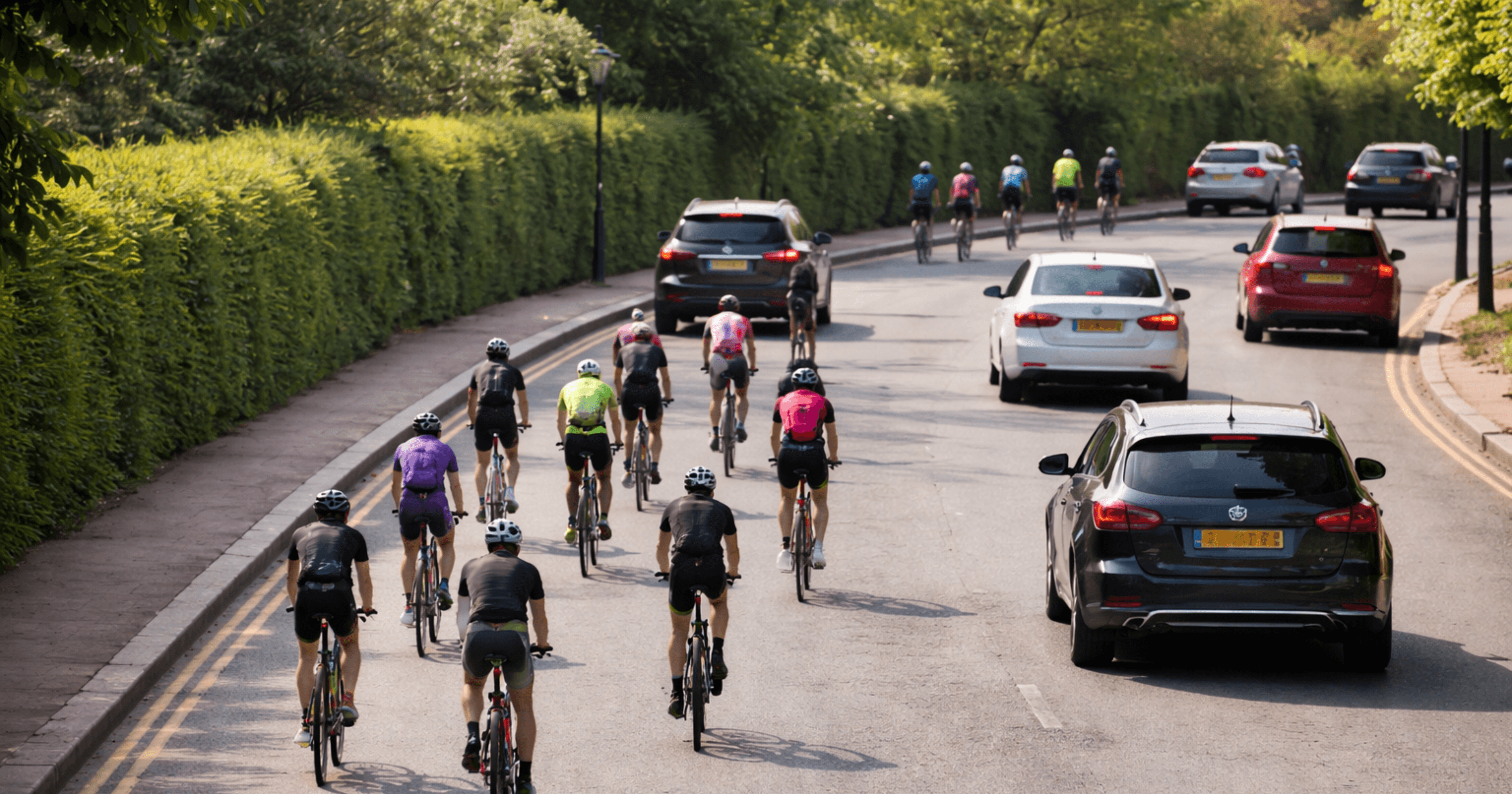
Early spring isn’t just a physical transition; it’s a safety one. Road surfaces are often rougher after winter, visibility and light change quickly, and twilight conditions are associated with higher crash severity for cyclists—especially in mixed traffic. Weather and surface conditions also shift crash probabilities for different scenarios, with precipitation, glare and wind contributing to risk patterns that cyclists can feel on the road.
Fatigue early in the season doesn’t help: in endurance cohorts, reduced sleep and accumulating tiredness are linked with slower reactions and more injuries—exactly the factors that erode attention in complex traffic.
This is where cycling smart really matters. With My Bike Guard, you can ride with more confidence through a period when both your physiology and the environment are changing—saving your rides as Sessions for clarity, and keeping safety top‑of‑mind while your routines settle.
Small layers of preparation during the spring transition make a big difference to confidence—so you can focus on building rhythm while the roads and your body adjust.
Win Spring, Own Summer
Your longest ride might look impressive on paper, but it’s your first rides—the quiet, controlled, slightly underwhelming ones—that decide how the rest of your season feels. Respecting those first 10 spring rides does three things:
Protects your body while durability catches up to enthusiasm.
Builds reliable rhythm that outperforms sporadic hero days.
Keeps you safer while roads, light, and routines shift.
Build your spring patiently, and let My Bike Guard support you—free, simple, and ready on your phone—so good weather turns into a season defined by steadiness, confidence, and safer riding.
Sources & further reading
- Detraining in endurance athletes (cardiorespiratory & metabolic changes): Frontiers in Physiology review. [Frontiers, 2024]
- Connective tissue adapts slower than muscle (collagen remodeling with load): Mechanical Adaptation and Tissue Remodeling chapter. [Springer/Nature] [
- Load spikes & injury risk (principle and caveats): Systematic review on ACWR; methodological critique. [BMC Sports Sci Med Rehab, 2025; arXiv]
- Consistency beats sporadic overload in early season: Spring training guidance; return‑to‑training transition principles. [Cycling UK, 2024; NSCA/CSCCa]
- Sleep & injury risk in endurance athletes (prospective data): BJSM abstract (endurance cohort). [BJSM]
- Spring safety context—light, surfaces & weather: Risk factors for crash severity (twilight); weather impacts on crash types. [MDPI Sustainability, 2022; European Transport Research Review, 2022]